
In late February, I was a ChatGPT user. Not a devoted one. A habitual one.
Then OpenAI signed a deal with the Pentagon, hours after a smaller rival had walked away from the same table over its principles. I didn't storm off. I kept ChatGPT for a bit of image generation. But within a month, everything else I do had moved to Claude.
That's the quiet part nobody tweets about. Goliath doesn't lose customers in one dramatic exit. It loses their default. And a default, once it moves, rarely comes back.
I’m always interested in branding and how to help small businesses find new opportunities, so I started wondering how often this happens. Not the scandal itself (those are everywhere), but the moment after. When a giant trips, who is standing close enough to catch the people walking away?
This piece is for the smaller players: the founders, the challengers, the purpose-led businesses competing against companies with a hundred times their budget. I looked at four events from the past year and asked one question:
In what ways can small players emerge in markets ruled by Goliaths?
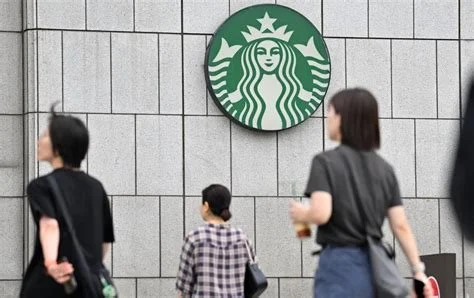
1. Starbucks Korea and "Tank Day": the cost of a cultural blind spot
What happened: On May 18, 2026, Starbucks Korea promoted a line of tumblers under the name "Tank Day", on the anniversary of the 1980 Gwangju pro-democracy uprising, which troops crushed with tanks. The backlash was immediate. Shinsegae, which runs Starbucks in Korea under licence, fired the local CEO, the chairman publicly apologized, and in June more than 2,000 stores closed for an afternoon of historical-awareness training.
As a linguist wrote in The Conversation, these blunders are rarely about translation. They are about culture, and even the biggest brands miss it.
Where customers went: In the early-summer weeks, estimated card spending rose 28.6% at Mega MGC Coffee, 27.6% at Twosome Place and 16.8% at Compose Coffee, while Starbucks fell (Asia Economy). By October, Starbucks had reclaimed the top spot after a five-month slump (Korea Times). Mega Coffee was already growing before the scandal (Korea JoongAng Daily).
What this means for the Davids: The window opened. Then it closed. Five months is not a market shift, it's an audition.
What people wanted during those months wasn't cheaper coffee. They wanted a brand that understood where it was standing. Smaller, local and purpose-led businesses have that by default. The ones who benefit long term are the ones who already had it on display before the giant stumbled, not the ones who scramble to look virtuous after.
One action you can take today
Write down the one thing your customers trust you to understand that a global competitor can't: a place, a history, a community, a value. Then check whether a stranger landing on your website would find these in ten seconds.
2. OpenAI, the Pentagon and #QuitGPT: when values become visible
What happened: On February 27, 2026, Anthropic refused Pentagon terms that would have allowed unrestricted military use of its AI. Hours later, OpenAI announced its own Pentagon deal. Sam Altman later admitted in an internal memo that it looked "opportunistic and sloppy" (LumiChats timeline).
Where customers went: U.S. uninstalls of ChatGPT jumped 295% in a day (TechNewsDay). Claude's downloads rose 37% and then 51% on consecutive days, and it hit No. 1 on the U.S. App Store for the first time (The Daily Star). At the start of the year it had ranked 42nd.
What this means for the Davids: Anthropic didn't win that weekend with a better product launch. It won by saying no, publicly, at the exact moment the leader said yes.
Most small companies have values. Few have them where a customer can see them before a crisis. When a giant contradicts itself, people don't go looking for an alternative from scratch. They go to whoever was already standing for the opposite.
I was one of them. I didn't read a comparison chart. I knew where the other company stood.
One action you can take today
Find one decision your business has made that cost you something: a client you turned down, a supplier you dropped, a shortcut you refused. Tell that story publicly. Values only count when they are visible before they are needed.
3. Buy Canadian, round two: when origin becomes the brand
What happened: As a Canadian, this one is personal. The first Buy Canadian wave started in early 2025, when U.S. tariffs and "51st state" comments turned grocery runs into a statement. This year it came back. A 50% U.S. tariff on some Canadian goods took effect on August 22, 2026, and Canada answered with its own tariffs from September 8.
Where customers went: Sixty days in, Canadian retailers' spending on Canadian brands is up 10.7 percentage points from pre-tariff levels (Faire). In Q2 2026, 42.7% of Canadian retailers said they had changed their marketing practices (Retail Insider). In the first wave, Green Beaver's online sales jumped more than 400% in a single month (Globe and Mail).
But the bump faded for many businesses, as Melise Panetta warned it might in The Conversation. The real test, Al Jazeera noted, is how much more shoppers can afford to pay.
What this means for the Davids: Nobody here did anything wrong in their marketing. The giants' liability was simply where they come from. The Davids won by being from somewhere else.
That's a gift, not a strategy. Origin gets you noticed. It doesn't get you chosen twice. The brands still growing a year later are the ones who turned "made here" into a reason to stay: quality, service, a story worth retelling.
One action you can take today
Make your origin impossible to miss on the packaging, on the product page, in the first line of your bio. Then write the second sentence: why a customer should come back when the headlines move on.
4. Fast fashion's green claims: when proof becomes the advantage
What happened: For years, "conscious" collections and leaf-shaped badges did the heavy lifting for fashion giants. Then regulators started asking for receipts. France fined Shein €40 million in July 2025, partly over misleading sustainability claims. Italy followed with €1 million, noting Shein's emissions had actually risen in 2023 and 2024 (IADS). In December 2025, the UK banned "sustainable" ads from Nike, Lacoste and Superdry (Retail Gazette).
France went further, planning a per-item tax on ultra-fast fashion, mandatory environmental disclosures and a ban on its advertising — an approach Rowena Maguire argued in The Conversation is far more likely to work than voluntary schemes. And since September 27, 2026, EU rules ban calling a product "eco-friendly" or "green" without proof, and in-house eco badges are out (Fashion Law Journal).
The twist: In May 2026, Everlane (the "radical transparency" brand many of us found while looking for fast-fashion alternatives) sold a majority stake to Shein, in a deal reported at $100 million. It had been struggling with debt and fading relevance (Forbes). As one branding CEO told Forbes, acquisitions transfer associations, not just assets. Customers called it a sellout.
What this means for the Davids: When vague claims become illegal, the field levels. A small brand with real certifications suddenly has something a giant's marketing budget can't buy.
But Everlane is the warning label. A purpose-led brand that loses financial independence can end up working for Goliath. Purpose is a positioning. Independence is what lets you keep it.
One action you can take today
Audit your own sustainability language. Replace every "eco-friendly" or "sustainable" with the specific, provable fact behind it: the certification, the material, the number. If there's no fact behind a word, cut the word.
So, how do Davids rise?
Not by waiting for a giant to fall. Every one of these windows opened without warning, and most closed within months. The Davids who benefited were already standing in the right place.
Across the four stories, they rise in four ways:
By being close. Local understanding is something a global brand has to buy. You already own it.
By making values visible early. Customers leaving a giant go to whoever already stands for the opposite.
By turning origin into a reason to stay. Where you're from gets you noticed. What you do next gets you chosen again.
By proving, not claiming and staying independent. When the rules tighten, substance wins. Keep the ownership that lets you keep it.
Goliath will stumble again. It always does. The question is whether your brand is ready when it happens.
If you're a David in a market ruled by giants and want to find your own opening, let's talk. Connect with me on LinkedIn or reach out through my contact page, and we'll look at your specific case and where your growth could come from.