
Case Study
Sigma Promotions Product Catalogues
I owned this project end-to-end, acting as the single point of coordination between leadership, sales, proofreading & QA, and print vendors.
The Project
Sigma Promotions is a full-service promotional marketing agency serving corporate, education, and nonprofit clients across North America.
One of its core sales tools is a seasonal promotional product catalogues that were used by the Sigma Sales Teams for outbound and client pitches, the Sigma Leadership for brand positioning, and by clients to explore curated product selections
The project unfolded across three production cycles between 2023 and 2024, resulting in three fully curated promotional product catalogues. Each edition was designed and delivered both as a print-ready publication for distribution to VIP clients and as a digital version integrated into the Sigma Promotions website.
Catalogue 1: Fall / Winter 2023
This first edition marked Sigma’s transition from relying on vendor catalogues to producing its own curated, multi-vendor publication. With no internal reference for a project of this scope, the catalogue became both a creative and operational learning curve, requiring new processes to be defined while delivering a polished, print-ready result under seasonal deadlines.
-
The absence of an existing internal model meant that the workflow, and collaboration had to be established from scratch. Pricing added another layer of complexity, particularly for apparel, where vendors supplied undecorated products and Sigma fulfilled orders through local decorators in Canada and the United States. At the same time, multiple stakeholders, including sales, leadership, and administration, were contributing ideas simultaneously, increasing the need for clarity and coordination.
-
To address this, I centralized communication by creating a clear system for sales to submit product ideas based on client industries, budget ranges, and preferred decoration methods. In parallel, I worked closely with administrative staff to enable flexible, custom pricing—especially for apparel—ensuring the catalogue reflected Sigma’s real-world fulfillment model rather than vendor constraints.
This first catalogue established Sigma’s ability to deliver a complex, branded sales tool and laid the groundwork for process improvements in subsequent editions.
-
The first catalogue successfully introduced Sigma’s first curated, multi-vendor sales tool, proving the viability of an in-house editorial catalogue tailored to real client needs. It aligned sales, administrative, and leadership teams around a shared structure, enabled flexible pricing for complex product categories such as apparel, and established a clear foundation for improving efficiency, scalability, and collaboration in future editions.
Read the digital catalogue here.

Catalogue 2: Spring / Summer 2024
Building on the learnings from the first release, the second catalogue focused on transforming an ambitious one-off project into a scalable, repeatable system. In parallel, the digital edition was integrated with Sigma’s newly launched promotional product webshop, allowing users to click directly on product images or SKUs and submit quote requests—bridging print-inspired browsing with a measurable sales action.
-
Following the first catalogue, the main challenge shifted from feasibility to scalability. While the initial edition proved the concept, the design and production process was still time-intensive and vulnerable to inconsistencies. With growing input from sales and leadership, there was a clear need to reduce manual effort, improve consistency across pages, and gain better control over the catalogue’s overall structure and length.
-
Using feedback from the first release, I identified the most effective page layouts and converted them into reusable templates. I introduced a structured use of InDesign paragraph and typography styles, enabling faster global edits, stronger visual consistency, and a lower risk of production errors. In parallel, I redesigned the product curation spreadsheets, adding more granular product categories that allowed the catalogue to be planned editorially before design began. This structure made it possible to define chapter counts, control section length, and balance the flow of content across the entire catalogue.
-
The second catalogue marked a shift from a handcrafted document to a systematized editorial product. Design and production became faster, more predictable, and easier to maintain, while the catalogue itself gained clarity and cohesion. This edition established a repeatable workflow that could scale across future releases without sacrificing quality or brand consistency.
Read the digital catalogue here.
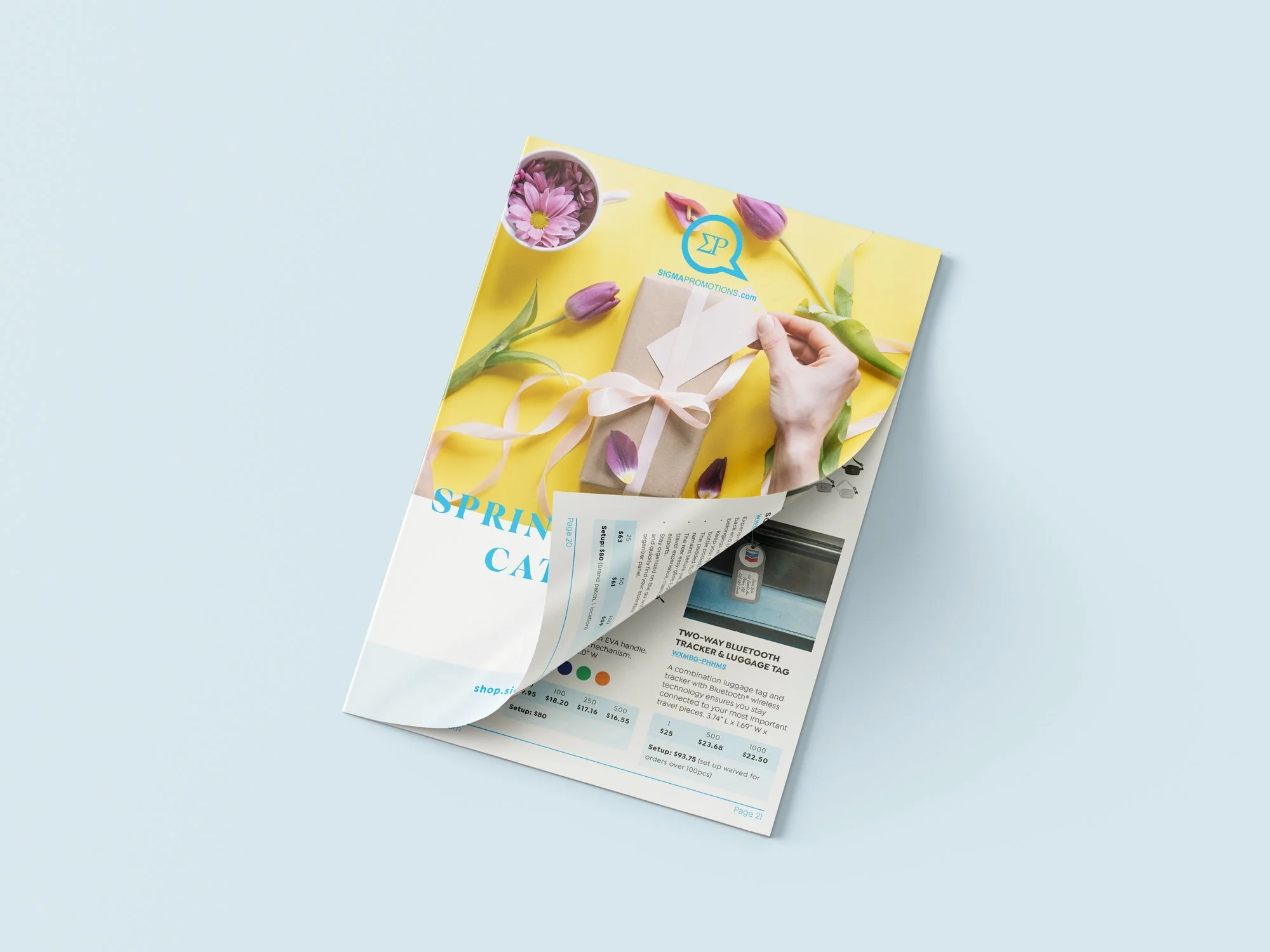
Catalogue 3: Fall / Winter 2024
By the third release, the catalogue had evolved from a design initiative into a mature, performance-driven sales tool. With two production cycles of data and feedback behind it, the focus shifted toward precision in planning, reliable delivery, and demonstrating clear commercial impact.
-
As the catalogue became an established sales channel, expectations around timelines, accuracy, and accountability increased. While the editorial system and workflows were already in place, estimating production timelines still relied partly on intuition. To maintain trust across teams and support growing sales reliance on the catalogue, delivery needed to become fully predictable and measurable.
-
Building on insights from previous editions, I analyzed and quantified design time requirements across different page types. For example, pages featuring two hero products consistently required less time than dense product grids with multiple color variations. By mapping these time estimates to the finalized product list provided by sales, I was able to forecast timelines with accuracy, communicate realistic deadlines in advance, and plan production capacity accordingly—holding myself accountable to those commitments.
-
The third catalogue was delivered on schedule with a high level of confidence across teams and marked a clear turning point in business impact. Combined sales initiated through the printed and digital catalogues reached approximately CAD 100,000, confirming the catalogue’s role as a reliable revenue-generating channel. At this stage, the project had fully transitioned from a creative experiment into a structured, accountable system supporting both sales performance and operational efficiency.
Read the digital catalogue here.
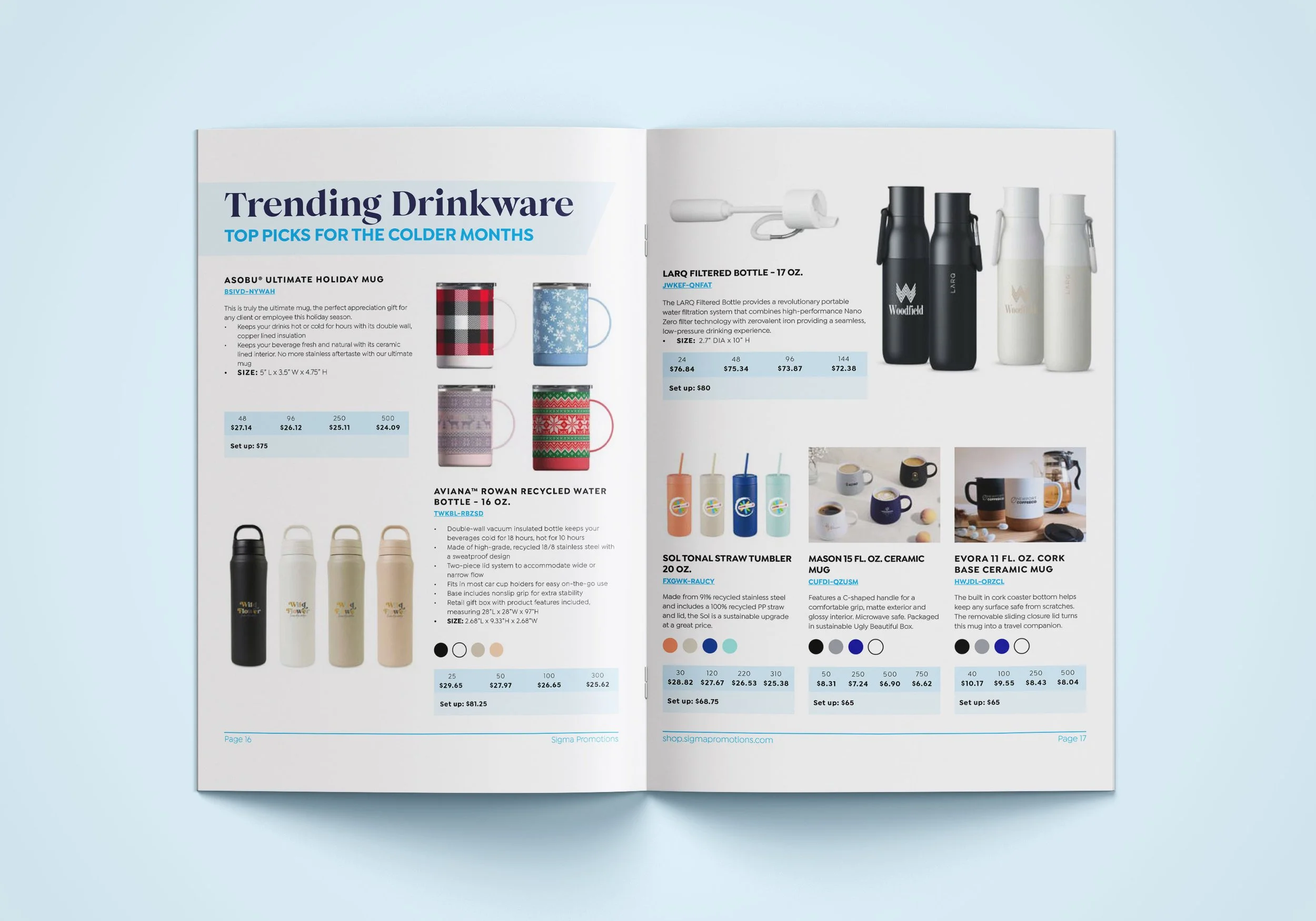
Delivered in Digital & Print-Ready Formats
Sigma Promotions is a promotional marketing agency with more 2000+ served clients including Royal Bank of Canada, Adidas, the Canadian Olympic Committee and Blackbaud.
As graphic designer and marketing pod leader at Sigma, my role included designing all printed self-promotional materials, such as our product catalogues that were mailed to existing and potential new clients.
Delivered:
3 Catalogues:
2023 Fall / Winter
2024 Spring / Summer
2024 Fall / Winter
Project management and collaboration with Leadership, Sigma Sales Team, the proofreader and the printer.
The Sigma Sales Team generated $100K+ promotional product revenue where sales was initiated through these catalogues.
Tools:
Photoshop
InDesign
Lightroom
Google Sheets for sharing up-to-date product information
WordPress and Issue for sharing the digital edition